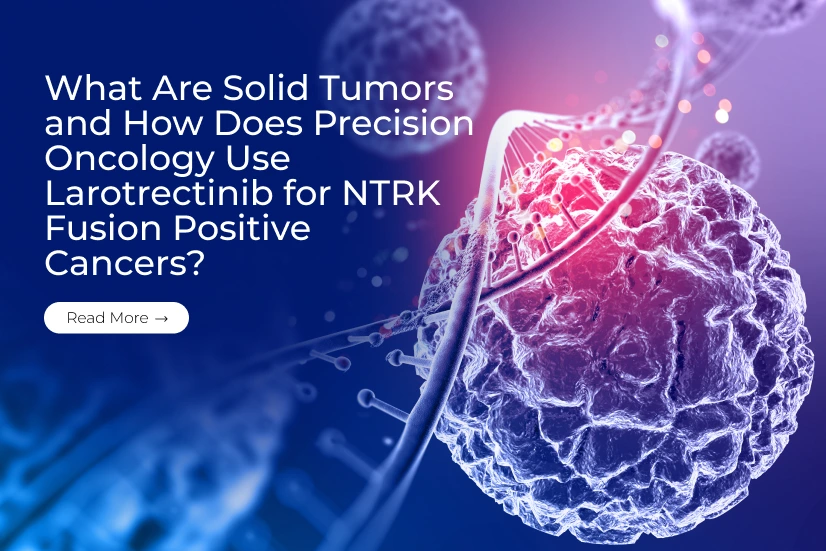
In recent years, there has been remarkable progress made in the treatment of cancer, whereby the methods have advanced from conventional to more targeted forms of therapy. Precision oncology is one of the latest developments in this regard, where the basis of treatment is the genetic structure of the tumor rather than its site. This has made it possible to treat tumors with rare mutations, such as NTRK fusions.
What Are Solid Tumors?
Solid tumors are an abnormal growth of tissue in a particular organ in the body caused by uncontrolled growth of the cells within those organs. Unlike cancer of the blood, solid tumors do not move from their place of origin but can occur in organs like the lungs, breast, colon, brain, and liver.
What Are the Most Common Types of Solid Tumors?
The occurrence of the symptoms associated with solid tumors is usually determined by their size and location within the body. The earlier stages of solid tumors do not usually have any symptoms, but as the tumor increases in size, symptoms start to occur. The usual symptoms of solid tumors include:
- Persistent pain.
- Unexplained weight loss.
- Fatigue.
- Swelling or lumps.
- changes in normal body functions.
Why Is Genetic Testing Important in Cancer Treatment?
Genetic testing is an important aspect of cancer treatment in the modern world due to the ability of identifying particular genetic mutations within tumors. Rather than adopting a general approach to the treatment, physicians will have the opportunity to tailor the treatment process according to genetic characteristics. It is worth mentioning that genetic testing is vital when dealing with NTRK fusion-positive cancers.
How Do Targeted Therapies Help in Blood Cancer Care?
In order to learn about the treatment process, it is imperative that to study the important medications that are used for the treatment of blood cancers and their mechanism of action.
What Is Larotrectinib?
The medication ‘Larotrectinib‘ is a targeted therapy used to treat patients having NTRK fusion genes in their cancers. Such fusions may be found in any kind of solid tumor cells regardless of the organ from which they have developed. The uniqueness of the treatment lies in the fact that it targets the genetic abnormality of the disease rather than its site.
Brand:
- VITRAKVI 25mg
- LARONIB 25mg
- VITRAKVI 100mg
- LARONIB 100mg
Benefits of The Medicine
Such targeted treatments have been extremely successful for treating patients with particular mutations in their genes. These advantages include:
- Effective against a range of tumors that have NTRK fusions.
- Offers a highly targeted mode of treatment.
- Demonstrates quick efficacy.
- Has better tolerability compared to conventional chemotherapy.
Side effects of the medicine
Although the treatments are normally more specific, there is still the chance of certain side effects. caused by the medicine. These include:
- Tiredness
- Dizziness
- Nausea
- Changes to liver enzymes
It should be noted that most side effects are not particularly difficult to manage if the patient is receiving proper medical care.
How Does Precision Oncology Improve Outcomes in Solid Tumor Treatment?
Precision oncology is the practice of identifying the specific genetic composition of the tumor of each individual patient. Through this approach, treatment becomes more targeted because it addresses the particular gene mutation responsible for the tumor. This not only improves the likelihood of success but also helps to avoid the unnecessary treatments that are no longer to respond.
What Should Patients Know Before Starting Targeted Therapy?
It is necessary that the patient should go through the process of proper diagnostics and genetic testing before starting with targeted therapy. Awareness about the advantages, potential side effects, and time of treatment helps in managing the expectations from this treatment method.
Conclusion
Solid tumors may be complicated in nature, but recent developments in precision oncology have changed the way they are being managed. For instance, targeted medications provide hope to individuals suffering from NTRK fusion-positive cancers. This is because such medications take into account the genetic reason behind cancer.
FAQs
1.Is the medicine be administered to all solid tumors?
No. This treatment option is used only in those cases where there are NTRK gene fusions in solid tumors, which should be diagnosed by genetic testing.
2. How fast does the treatment work?
Most people will notice the effect during a couple of weeks after the beginning of the treatment.
References
- Brown, J. M., & Giaccia, A. J. (1998). The unique physiology of solid tumors: opportunities (and problems) for cancer therapy. Cancer research, 58(7), 1408-1416. https://pubmed.ncbi.nlm.nih.gov/9537241/
- Manea, C. A., Badiu, D. C., Ploscaru, I. C., Zgura, A., Bacinschi, X., Smarandache, C. G., … & Botnarciuc, V. (2022). A review of NTRK fusions in cancer. Annals of Medicine and Surgery, 79. https://pubmed.ncbi.nlm.nih.gov/35860155/
- Armstrong, T. S., Vera-Bolanos, E., Acquaye, A. A., Gilbert, M. R., Ladha, H., & Mendoza, T. (2015). The symptom burden of primary brain tumors: evidence for a core set of tumor-and treatment-related symptoms. Neuro-oncology, 18(2), 252-260. https://pubmed.ncbi.nlm.nih.gov/26289592/
- Drilon, A., Laetsch, T. W., Kummar, S., DuBois, S. G., Lassen, U. N., Demetri, G. D., … & Hyman, D. M. (2018). Efficacy of larotrectinib in TRK fusion–positive cancers in adults and children. New England Journal of Medicine, 378(8), 731-739. https://pubmed.ncbi.nlm.nih.gov/29466156/
- Hong, D. S., DuBois, S. G., Kummar, S., Farago, A. F., Albert, C. M., Rohrberg, K. S., … & Drilon, A. (2020). Larotrectinib in patients with TRK fusion-positive solid tumours: a pooled analysis of three phase 1/2 clinical trials. The Lancet Oncology, 21(4), 531-540. https://pubmed.ncbi.nlm.nih.gov/32105622/