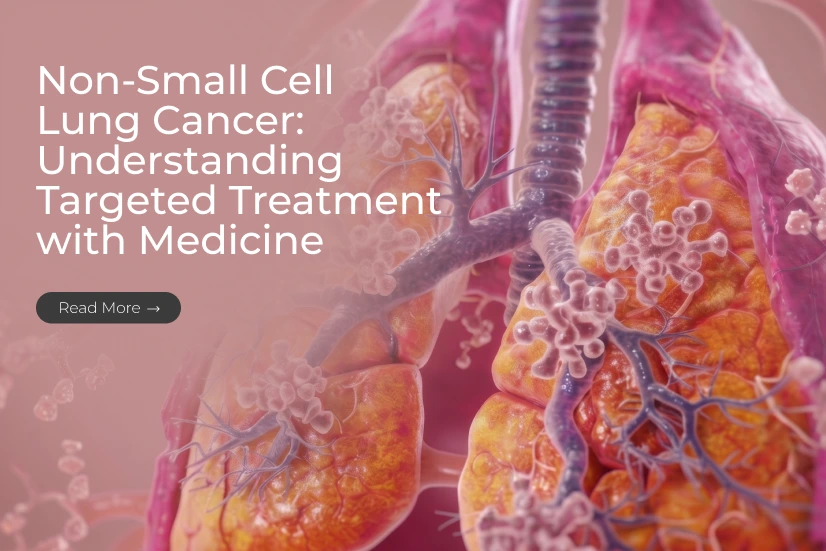
Non-small cell lung cancer is termed as a disease in which malignant cells form in the tissues of the lungs. Moreover, It can cause 80% to 85% of lung cancers. Targeted therapy is a precision treatment for this type of lung cancer. In addition, it can target specific genetic mutations which promote cancer growth. Thus, the specific action leaves the healthy cells unharmed and targets cancer cells.
What Is Non-Small Cell Lung Cancer?
This is known as the common type of lung cancer. Non-small cell lung cancer forms in the epithelial cells lining the inside of the lungs. Furthermore, it can spread in the body slowly as compared to SCLC. On the other hand, it can lead to certain symptoms. Moreover, it can cause a persistent cough, blood in the cough and shortness of breath.
What are the symptoms of non-small cell lung cancer?
The symptoms people undergo can be determined by their tumor’s location and stage. Moreover, these symptoms appear once the disease becomes advanced. However, in early stages it can have no symptoms. Therefore, regular testing can ensure early detection.
There are different symptoms, like:
Common symptoms of NSCLC
- Persistent Cough
- Coughing Up Blood
- Shortness of Breath
- Chest Pain
- Wheezing and Hoarseness
- Losing weight
- Fatigue
- Reduced desire to eat
Advanced symptoms of NSCLC
- Recurring Infections
- Bone Pain
- Nerve Issues
- Swelling
Why Does Genetic Testing Matter in NSCLC?
Genetic testing is crucial because it can aid in identifying DNA mutations. Also, these mutations increase tumour growth and division. Therefore, it can also help doctors in using specific targeted therapies. Moreover, doctors recommend undergoing such testing to determine the treatment plan.
Genetic testing can benefit therapy as follows:
- Unlocks Precision Medicine
- Targeted Therapies
- Fewer Side Effects
- Prevents Ineffective Therapies
How Targeted Therapy Differs from Chemotherapy
Targeted therapy attaches to or blocks certain mutations which increase cells of lung cancer. But chemotherapy kills all rapidly dividing cells inside the body. Moreover, there are major factors in which they differ from each other. They are as follows:
Targeted therapy acts on chemical messages or proteins that tell cancer cells to grow. However, chemotherapy can kill all rapidly dividing cells.
It works only in the presence of a specific mutation or gene. But chemotherapy cannot tell the difference between healthy cells and cancer cells.
Doctors prescribe targeted therapies as capsules or tablets that you can take at home. However, doctors usually administer chemotherapy in an infusion centre using intravenous drips.
What is the future of lung cancer treatment?
The future treatments are focusing on being chemotherapy-free and providing precise medicine systems.
There are specific future treatments for lung cancers, like:
- The Rise of Antibody-Drug Conjugates
- Therapies to Early-Stage Disease
- Next-Gen Immunotherapy & mRNA Vaccines
What are the medicines for NSCLC?
There are multiple medicines prescribed according to cancer’s stage, histology and genetic mutations. Moreover, these medicines are taken as oral pills, IV infusions and chemotherapies. On the other hand, a doctor always determines the dose and treatment regimen.
There are specific medicines, like:
Osimertinib
This is a targeted tyrosine kinase inhibitor which treats NSCLC by blocking EGFR mutations. Moreover, Osimertinib can bypass the blood-brain barrier and target CNS metastases. Therefore, causing the cancer cells not to multiply and replicate.
Brands Known
What are the benefits?
- Delays cancer progression
- Crosses the Blood-Brain Barrier
- Targeted action
- Convenient Oral Dosing
What are the side effects?
There are specific side effects like the following:
Common side effects
- Diarrhea
- Nausea
- Itching
- Rashes
- Redness
- Swelling
- Fatigue
Serious side effects
- Interstitial Lung Disease
- Heart Problems
- Severe Skin Reactions
- Eye problems
- Aplastic Anemia
Lorlatinib
Lorlatinib is a targeted oral medicine used to treat advanced non-small cell lung cancer. Furthermore, it targets ALK gene mutations which promote cancer cells’ growth. Therefore, this medicine blocks such proteins and causes cancer cells’ death.
Brands Known
- LORBRENA 100mg
- LORBREXEN 100mg
What are the benefits?
- Tumor shrinkage
- Overcomes Drug Resistance
- Targeted action
- Crosses the Blood-Brain Barrier
What are the side effects?
There are specific side effects like the following:
Common side effects
- Swelling
- Depression
- Memory loss
- Diarrhea
- Fatigue
- Increased blood pressure
Serious side effects
- Nerve Changes
- Lung Problems
- Heart Rhythm Changes
- Liver Problems
Conclusion
Targeted therapy is one of the crucial treatment regimens doctors use. Moreover, it has higher efficacy against cancer cells. These can target specific mutations, proteins, signaling and pathways. In addition, genetic testing can determine specific mutations. It can help to assess the disease and decide a specific regimen. Also, different medicines can target different mutations and block cancer cells’ growth.
FAQs
Why does targeted therapy not have many side effects?
Unlike other therapies, targeted therapy does not affect healthy cells’ function. Moreover, it only targets specific mutations. Therefore, this helps the treatment to have fewer side effects.
How is genetic testing used in modern therapy?
This can help to determine specific mutations in patients. In addition, it can aid in deciding a specific treatment regimen.
References
- Alduais, Y., Zhang, H., Fan, F., Chen, J., & Chen, B. (2023). Non-small cell lung cancer (NSCLC): A review of risk factors, diagnosis, and treatment. Medicine, 102(8), e32899. https://journals.lww.com/md-journal/fulltext/2023/02220/non_small_cell_lung_cancer__nsclc___a_review_of.2.aspx
- Rotow, J., & Bivona, T. G. (2017). Understanding and targeting resistance mechanisms in NSCLC. Nature Reviews Cancer, 17(11), 637-658. https://www.nature.com/articles/nrc.2017.84
- Cardarella, S., Ortiz, T. M., Joshi, V. A., Butaney, M., Jackman, D. M., Kwiatkowski, D. J., … & Johnson, B. E. (2012). The introduction of systematic genomic testing for patients with non–small-cell lung cancer. Journal of Thoracic Oncology, 7(12), 1767-1774. https://www.sciencedirect.com/science/article/pii/S1556086415331592
- Mascaux, C., Tsao, M. S., & Hirsch, F. R. (2018). Genomic testing in lung cancer: past, present, and future. Journal of the National Comprehensive Cancer Network, 16(3), 323-334. https://jnccn.org/configurable/content/journals$002fjnccn$002f16$002f3$002farticle-p323.xml?t:ac=journals%24002fjnccn%24002f16%24002f3%24002farticle-p323.xml
- Pérez-Herrero, E., & Fernández-Medarde, A. (2015). Advanced targeted therapies in cancer: Drug nanocarriers, the future of chemotherapy. European journal of pharmaceutics and biopharmaceutics, 93, 52-79. https://www.sciencedirect.com/science/article/abs/pii/S0939641115001514