Low platelet Count( Thrombocytopenia) impair blood clotting that leads to prolonged healing of a wound and injury. In severe cases it also leads to internal bleeding as well as hemorrhage that can be life threatening and fatal.
Internal default mechanisms as well as certain disease conditions significantly contribute to this issue. Proper medication with Doptelet 20mg Tablet and Avapag 20mg Tablet boosts platelet production. This deep insight explores all the necessary facts associated with this issue.
Introduction to Platelets and Their Role
Platelets, also known as Thrombocytes, are tiny disc shaped cell fragment (Not full) produced in the bone marrow of the body. Megakaryocytes are the mother cells of Thrombocytes that produce platelets. Its normal count in the circulating blood is 150,000-450,000 per micro liter.
Following are the major roles of Platelets in the body:
Homeostasis and Clot Formation: Platelets stick to the damaged blood vessels walls via specific receptors such as GP1b-IX-V for collagen factor. It aggregated to form a cascade of fibrin fibers on the wound or injury to stop bleeding as well as starts healing.
Inflammation and Immunity: Thrombocytes binds to the pathogen and release cytokines/chemo kines. This forms the platelets-leukocytes aggregates to modulate monocytes in the immune system. Monocytes via antimicrobial peptide formation as well as NETosis facilitation contribute in innate immunity in the body that helps to fight against any type of disease.
Wound Healing and Growth: Platelets secrete certain growth factors such as PDGF, TGF-bETA etc from alpha granules that promote tissue repair, angiogenesis as well as regeneration post-injury.
What Is Low Platelet Count (Thrombocytopenia)?
Thrombocytopenia is a hematologic condition that refers to low blood platelets count, typically below 150,000 per micro liter of Blood. It generally, restricts the blood’s ability to form blood clots after injury as well as heightens bleeding risk.
Major Causes of Low Platelets
Following are the major causes of low platelets:
Increased Destruction: Immune Mediated infections or diseases or Non-Immune meditated Antigen attack of a particular disease affects the natural blood platelets formation production, in order to weaken the immune system. This makes body more susceptible to infections and other diseases.
Decreased Production: Bone marrow suppression from multiple therapies such as Chemotherapy, Radiation Therapy as well as Targeted Therapy greatly contributes to decrease in blood cell production. Major disorders such as Leukemia, Aplastic Anemia as well as Myelodysplatic Syndromes causes Thrombocytopenia as its major symptom. Environmental exposure to toxic chemicals as well as substance abuse also significantly contribute in the cause of Thrombocytopenia.
Sequestration/ Dilution: Splenomegaly from Cirrhosis, Hypersplenism (Enlargement of Spleen) Trapping Platelets, Dilution from Massive Transfusions as well as pregnancy Complications also significantly contribute in low blood platelets counts in the body.
Early Symptoms and Warning Signs
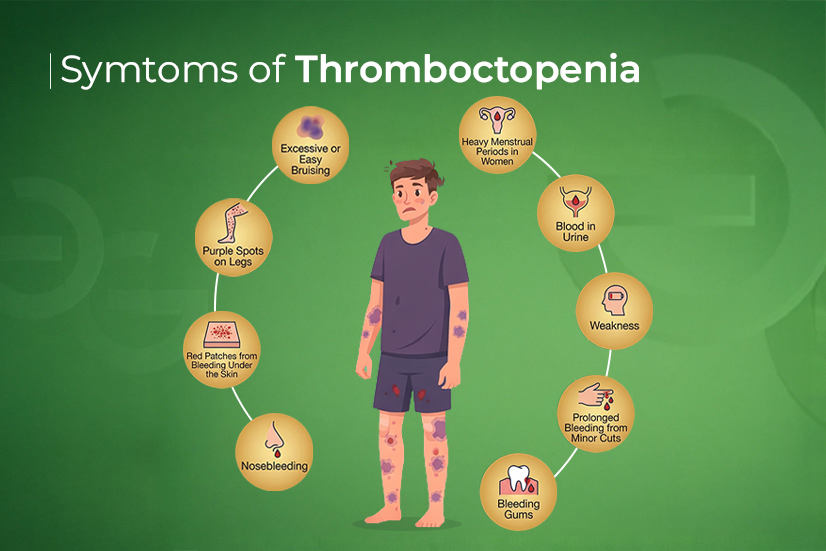
Following are the early Symptoms and Warning Signs of Thrombocytopenia:
Excessive or Easy Bruising
Purple Spots on Legs
Red Patches from bleeding under the Skin
Nosbleeding
Bleeding gums
Prolonged Bleeding from Minor Cuts
Heavy Menstrual Periods in Women
Blood in Urine
Weakness
How Low Platelets Affect the Body?
Following are the ways in which Low Platelets affect our body:
Impaired Cotting and Bleeding: Low Blood Platelets hinder the basic biological functioning of the body. it hinders the blood clot formation, causing easy bruising, red spots in skin, prolonged bleeding, heavy menstrual flow etc. All these factors lead to a prolonged body’s healing process. As a result, it disturbs body functioning.
Internal Bleeding Risks: Thrombocytopenia leads to blood in urine, causes internal weakness, severe headaches, confusions as well as vision changes signaling potential brain bleeding.
Systemetic Effects: Low Platelets majorly contributes to malaise, enlarged spleen , or life threatening complications such as Intracrancial Hemorrhage in multiple cases (<10,000 platelets/uL), increasing overall bleeding vulnerability.
Diagnosis: How Doctors Check Platelet Levels?
Following are the different as well as major diagnostic measures to check platelet level in the body:
Complete Blood Count: Includes complete blood cells count to determine abnormal cell growth as well as measure platelet cells count (<150,000/uL) to detect Thrombocytopenia.
Peripheral Blood Smear: Analyzing of cell surface via microscopic examination to detect platelet clumping, abnormal morphology etc.
Bone Marrow Examination: Biopsy of bone marrow tissue to find out any platelet production defects in the body.
Treatment Options for Low Platelet Count
Following are the different treatment options for Low Platelet Count:
Treat Underlying Cause: It involves the treatment of the underlying cause of low platelets such as Cancer, Hepatitis infection, HIV infection, Pregnancy Complications etc.
Advanced Therapies: Includes Platelets Transfusions for active bleeding as well as Plasma Exchange for chronic condition.
Medications: Doctor mainly prescribes thrombopoetin receptor agonists based medications such as Doptelet 20mg Tablet and Avapag 20mg Tablet to boosts platelet production in the bone marrow.
Doptelet 20mg Tablet
It treats thrombocytopenia in adults with Chronic Immune Thrombocytopenia (ITP) refractory to other therapies or liver diseases.
Avatrombopag salt acts as a Thrombopoietin receptor agonist, promoting bone marrow to produce more blood platelets.
Side effects include Headache, Nausea, Joint Pain, Bleeding, Blood Clots, Severe Allergic reaction etc.
Avapag 20mg Tablet
It treats Low Platelets Counts ( Thrombocytopenia) in adults with Chronic Immune Thrombocytopenia (ITP) refractory to other therapies, Liver Infection or other Liver Diseases.
Avatrombopag salt acts as a Oral Thrombopoietin receptor agonist, promoting Megakaryocyte proliferation and differentiation in bone marrow to boost platelet production.
Side effects of Avapag 20mg Tablet include Fever, respiratory Tract infection, Edema, Joint Pain, Pulmonary Embolism, Unusual Bleeding, Shortness of Breath etc.
Diet and Lifestyle to Support Platelet Health
Following are the diet and lifestyle tips to support platelet health:
Eat Nutrient Rich Food such as Leafy greens vegetables, cereals etc.
Regular Exercises
Avoid High Sugar and Processed Meat Items
Stay Hydrated
Take Adequate Rest
Manage Stress
Avoid Substance Abuse
Go for Regular Health Check ups
Conclusion
To conclude, Thrombocytopenia, or low platelet counts, hinders blood clotting, contributing to prolonged healing and significant health risks. Causes include increased platelet destruction, decreased production due to conditions like leukemia, or spleen sequestration.
Symptoms may manifest as bruising, bleeding gums, and blood in urine. Diagnosis is done through methods like Complete Blood Count (CBC) and bone marrow examination. Treatment focuses on underlying issues, platelet transfusions, and medications such as Doptelet and Avapag, which may cause side effects like headaches and allergic reactions.
A healthy lifestyle with proper nutrition, exercise, and stress management is advised to maintain platelet health. To get heavy discount on medications, visit Globans Pharma now. It offers pan global delivery from trusted sources.
FAQs
1. What is the scientific name of platelets?
Thrombocytes is the scientific name of platelets.
2. What is Thrombocytopenia?
Thrombocytopenia is a hematologic condition that refers to low blood platelets count, typically below 150,000 per micro liter of Blood.
References
Low platelet count(Thrombocytopenia) – Symptoms and causes – Mayo Clinic – https://www.mayoclinic.org/diseases-conditions/thrombocytopenia/symptoms-causes/syc-20378293
Thrombocytopenia Guide: Causes, Symptoms and Treatment Options – https://www.drugs.com/health-guide/thrombocytopenia.html
Thrombocytopenia (Low Platelet Count): Symptoms and Treatment – https://www.health.com/thrombocytopenia-7557831
List of 18 Thrombocytopenia Medications Compared – https://www.drugs.com/condition/thrombocytopenia.html