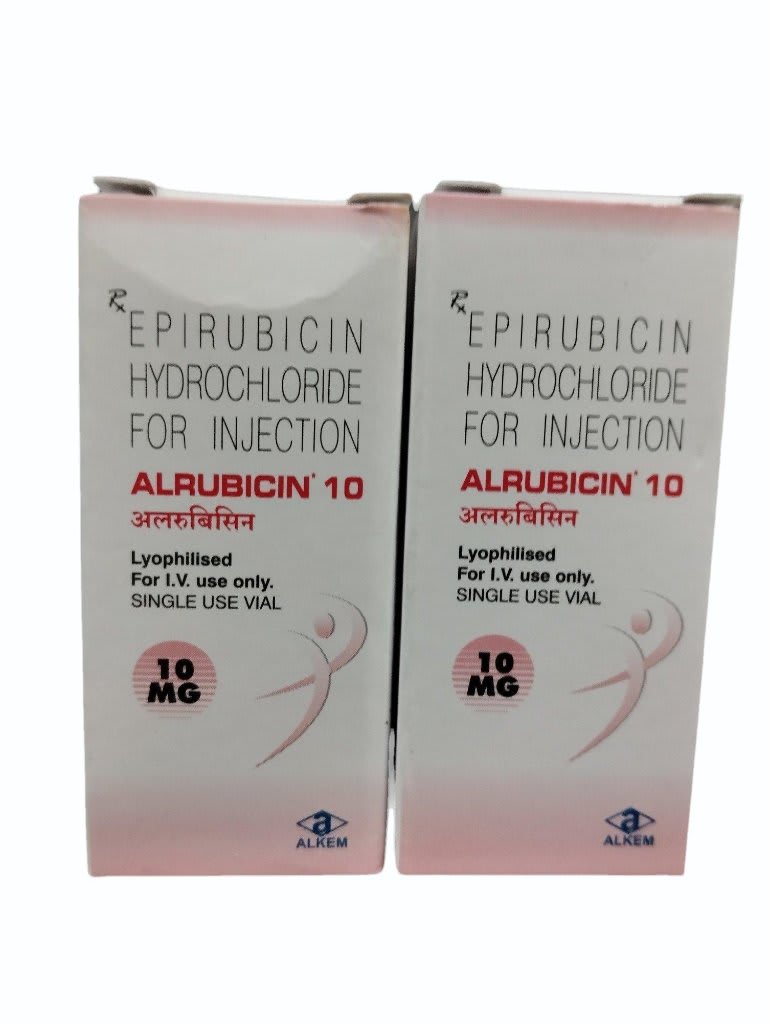
Alrubicin 10mg Injection (Epirubicin Hydrochloride)
 Prescription Required
Manufactured By
Alkem Laboratories Ltd
Pack Of
1
Salt Composition
Epirubicin Hydrochloride
Storage
Keep refrigerated at 2°C-8°C. Do not freeze
ALL SUBSTITUTES

Cadrubin 50mg Injection

Epribenz 50mg Injection

Farmorubicin 50mg Injection

Innorubicin 50mg Injection

Epizee 10mg Injection

Farmorubicin 10mg Injection
Overview
Alrubicin 10mg Injection contains epirubicin, an anthracycline cytotoxic chemotherapy medicine. It works mainly by intercalating into DNA and inhibiting topoisomerase II, leading to DNA damage and cancer-cell death. Epirubicin 10mg injection is used in combination chemotherapy for several cancers, particularly breast cancer, with additional uses depending on local protocols and product labels. It is administered intravenously by trained healthcare professionals and can cause significant bone-marrow suppression and cumulative heart toxicity. The lifetime anthracycline exposure of the patient is therefore important. Alrubicin 10mg Injection is a prescription medicine and requires careful monitoring of blood counts, heart function, liver function, and the infusion site.
Quick Product Facts
| Field | Publication wording |
|---|---|
| Brand | Alrubicin |
| Active ingredient | Epirubicin |
| Strength / presentation | 10 mg/5 mL |
| Form | Injection |
| Medicine class | Anthracycline cytotoxic chemotherapy |
| Manufacturer / marketer | Alkem Laboratories Ltd |
| Pack | 1 vial, 5 mL |
| Prescription | Yes |
Uses and Indications
Epirubicin 10mg injection is commonly used as part of combination chemotherapy for breast cancer, including adjuvant treatment in appropriate patients. It may also be incorporated into specialist regimens for other solid tumors and hematological malignancies depending on regional approvals and institutional protocols. The exact dose and combination depend on the cancer type, treatment intent, previous anthracycline exposure, heart function, liver function, and bone marrow reserve. Anthracycline dosing is not interchangeable on a milligram-for-milligram basis without protocol guidance.
How Alrubicin 10mg Injection Works
Alrubicin 10mg is an anthracycline chemotherapy medicine. It intercalates between DNA base pairs, inhibits topoisomerase II, and generates free-radical-mediated cellular injury. These actions interfere with DNA replication and can kill rapidly dividing cancer cells. Cardiac tissue and bone marrow can also be damaged, explaining cumulative cardiomyopathy and myelosuppression. Epirubicin 10mg is a vesicant, so leakage outside the vein can cause severe local tissue injury.
Clinical Evidence for Alrubicin 10mg Injection
Evidence context: The studies below are pivotal or widely cited evidence supporting the Epirubicin 10mg injection in major treatment settings. Trial results should not be interpreted as a guarantee of benefit for an individual patient, and exact eligibility must match the current approved indication and oncology guideline.
| Study | Why it matters |
|---|---|
| Anthracycline breast-cancer evidence base | Epirubicin-containing regimens such as FEC/CEF have extensive evidence in adjuvant and advanced breast cancer. |
| Cumulative-dose safety evidence | Longstanding anthracycline experience establishes the relationship between cumulative exposure and cardiomyopathy risk, supporting cardiac monitoring and lifetime-dose review. |
Side Effects of Alrubicin 10mg Injection
Alrubicin 10mg injection may cause side effects, and their frequency varies by indication, dose, combination regimen, and patient population. The list below highlights clinically important effects rather than assigning a single percentage across different trials.
Common side effects
- Neutropenia / leukopenia
- Anemia
- Thrombocytopenia
- Nausea and vomiting
- Hair loss
- Mouth sores
- Fatigue
- Temporary red-colored urine after treatment
Serious side effects
- Cardiomyopathy / heart failure
- Severe infection from myelosuppression
- Extravasation with tissue necrosis
- Secondary leukemia
Critical Safety Warning
Anthracycline cardiotoxicity can be delayed and is related to cumulative lifetime exposure. Severe local tissue necrosis can occur with extravasation. Other serious risks include profound myelosuppression, secondary leukemia, and severe infection. Epirubicin 10mg injection must not be given intramuscularly or subcutaneously.
Alrubicin 10mg Injection Dosage and How To Take It
Epirubicin injection is dosed according to the chemotherapy protocol and body surface area; there is no single dose appropriate for every cancer. In adjuvant breast cancer regimens, labelled doses are commonly given on day 1 of repeated cycles or split across defined cycle days, depending on the regimen. Dose modification is required for hepatic impairment and severe myelosuppression. The 10 mg vial is a product presentation, not a patient dose. Administration must be intravenous through a secure line because extravasation can cause severe tissue necrosis.
Administration guidance: Alrubicin 10mg injection must be administered intravenously by an experienced oncology professional. The dose is calculated from the chemotherapy regimen and body surface area and may be modified according to blood counts, liver function, and previous treatment. The medicine is vesicant: if it leaks outside the vein, severe tissue damage can occur. Tell the nurse immediately about burning, pain, redness, or swelling at the infusion site. Blood counts are checked before treatment, and heart function may be assessed before and during therapy, particularly as cumulative anthracycline exposure increases. Do not self-administer this medicine.
Alrubicin 10mg Injection Missed Dose
If a scheduled dose is missed, the oncology team must decide the new treatment date based on the chemotherapy protocol, blood counts, and organ function. Never compensate with an extra dose.
Safety Advice for Alrubicin 10mg Injection
| Category | Status | Guidance |
|---|---|---|
| Heart | Critical monitoring | Review lifetime anthracycline exposure and assess cardiac function before and during therapy as clinically indicated. |
| Blood counts | Essential | CBC monitoring is required because severe myelosuppression can occur. |
| Extravasation | Emergency local management | Pain, burning, redness, or swelling at the IV site must be reported immediately; tissue necrosis can occur. |
| Pregnancy | Avoid | Can cause fetal harm. Discuss contraception and fertility preservation before therapy. |
| Breastfeeding | Avoid | Do not breastfeed during anthracycline treatment; follow current label guidance. |
| Liver | Dose/monitor | Hepatic dysfunction can reduce clearance and may require dose adjustment. |
Monitoring During Alrubicin 10mg Injection Treatment
Check CBC and liver function before treatment. Assess baseline cardiac function and repeat as clinically indicated, especially with increasing cumulative anthracycline exposure or other cardiotoxic therapies. Monitor the infusion site continuously for pain, burning, swelling, or erythema. Record prior anthracycline exposure.
Practical monitoring checklist
- Complete blood count (CBC) at the label/protocol-recommended intervals
- Liver function according to baseline risk and treatment label
- Cardiac assessment/ECG or ejection-fraction monitoring when clinically indicated
Alrubicin 10mg Injection Fact Box
| Parameter | Verified / publication wording |
|---|---|
| Generic | Epirubicin |
| Brand | Alrubicin |
| Manufacturer / marketer | Alkem Laboratories Ltd |
| Strength / presentation | 10 mg/5 mL |
| Form | Injection |
| Drug class | Anthracycline cytotoxic chemotherapy |
| Mechanism / target | Epirubicin injection is an anthracycline chemotherapy medicine. |
| Main indication context | Epirubicin 10mg injection is commonly used as part of combination chemotherapy for breast cancer, including adjuvant treatment in appropriate patients. |
| Biomarker / selection | No single predictive biomarker; tumor- and regimen-based |
| Administration | IV infusion |
| Major warning | Cumulative cardiomyopathy, severe myelosuppression, and extravasation tissue necrosis |
| Pack | 1 vial, 5 mL |
| Storage | Keep refrigerated at 2°C-8°C. Do not freeze. |
| Prescription required | Yes |
| Key evidence | Anthracycline breast cancer evidence base, cumulative-dose safety evidence |
Alrubicin 10mg Injection Drug Interactions
| Drug / Class | Risk | What To Do |
|---|---|---|
| Trastuzumab/other cardiotoxic medicines | Can increase cardiomyopathy risk | Carefully sequence therapy and monitor cardiac function. |
| Other anthracyclines | Increase cumulative cardiac exposure | Track lifetime anthracycline dose. |
| Other myelosuppressive chemotherapy | Increases cytopenia/infection risk | Use protocol-specific blood-count criteria. |
| Live vaccines | Risk of serious infection during immunosuppression | Avoid unless specifically directed. |
| Medicines affecting hepatic clearance | May alter epirubicin 10mg injection exposure | Review co-medications and liver function. |
FAQs About Alrubicin 10mg Injection
What is the Alrubicin 10mg Injection used for?

Alrubicin 10mg Injection contains Epirubicin. Its approved uses depend on the cancer type, disease stage, biomarkers where relevant, previous treatment, and the current product label. The oncologist determines whether this medicine fits the treatment plan.
Is Alrubicin 10mg Injection chemotherapy?
Yes, this is a cytotoxic chemotherapy medicine.
Can the dose be decided from the tablet/capsule/vial strength?
No. The strength printed on the pack is not necessarily the patient dose. Dosing may depend on indication, body size, kidney/liver function, treatment cycle, combination regimen, and toxicity.
What should I do if I develop a fever during epirubicin injection treatment?
Contact the oncology team urgently, especially with medicines that lower white blood cells. Fever during neutropenia can indicate a serious infection requiring rapid assessment.
Can I stop epirubicin treatment if side effects occur?
Do not stop or reduce treatment on your own. Many oncology medicines have structured interruption and dose-reduction rules that allow toxicity to be managed safely.
Can I take supplements or herbal medicines with this treatment?
Only after discussing them with the oncology team. Herbal products and OTC medicines can alter drug levels, bleeding risk, liver function, or treatment toxicity.
Does the 10 mg vial equal one chemotherapy dose?
No. Epirubicin doses are protocol- and body-surface-area-dependent and may require multiple vials. The oncologist calculates the total dose.
Why is the infusion site watched closely?
Epirubicin is a vesicant. Leakage outside the vein can cause severe tissue injury and needs immediate management.
References
- Pfizer Farmorubicin India Local Product Document (2024/current). https://labeling.pfizer.com/ShowLabeling.aspx?id=15025
- FDA Ellence/epirubicin 10mg Injection prescribing information. https://labeling.pfizer.com/showlabeling.aspx?id=657
- NCI Drug Dictionary: Epirubicin 10mg Injection. https://www.cancer.gov/publications/dictionaries/cancer-drug/def/epirubicin-hydrochloride
- ScienceDirect. Epirubicin Injection. https://www.sciencedirect.com/topics/neuroscience/epirubicin
- MDPI. Development of Epirubicin 10mg Injection loaded biocompatible polymers. https://www.mdpi.com/2073-4360/13/8/1212
Marketer Details
Alkem Laboratories Ltd
Author Details

Written By:
Nonish Sharma
I am a medical content writer with a strong academic background in life sciences, holding an M.Sc. in Biotechnology... Read More

Reviewed By:
Vaibhav Shakya
Dr. Vaibhav Shakya, MD, is a Medical reviewer and medicine expert at Globans Pharma, with more than 9 years of experienc... Read More
Want to know More
Check our Editor Policy
Disclaimer
Globanspharma main goal is to ensure that its consumers get correct, authentic, and reliable information that has been examined by medical professionals. This website's content has only been created for informational purposes. However, this is not meant to replace the medical advice and treatment given by a qualified physician. The information presented herein may not cover everything about particular lab tests, medicines, and health conditions, all possible side effects, and warnings. Please discuss all your queries related to any medication and illness with your doctor. We intend to support and maintain the doctor-patient relationship, not to substitute it or take its place.